Contents
In short
- GNM, B.Sc and M.Sc nurses up to 41 can apply. Freshers can apply too.
- You need German at B2. It takes about 6 months of full-time classes from zero.
- You do not need IELTS or OET.
- In a public hospital a registered nurse starts at €3,510 per month, about ₹2.4 lakh in hand.
- Your husband or wife and your children can join you.
Can you apply?
Answer two questions to check.
Choose your qualification and age to see the answer.
| Requirement | What you need |
|---|---|
| Qualification | GNM, B.Sc or M.Sc Nursing |
| Age | Up to 41 |
| German | B2 |
| Work experience | Not required |
| IELTS or OET | Not required |
If you are not a nurse yet, you can train as one in Germany after 12th and be paid while you learn. Nursing Ausbildung in Germany
Learning German
Hospitals in Germany work in German, so you need B2 (upper intermediate). At B2 you can talk with patients and colleagues and follow a handover.
From zero, B2 takes about 6 months of full-time classes. Part-time takes longer. Our training partners teach online or offline, and you finish with a recognised B2 exam such as Goethe, telc or ÖSD. German classes
How long each level takes, and what the exams cost in India: German from A1 to B2
Getting your German nursing licence
To work as a registered nurse in Germany you need a German nursing licence. The nursing office of the German state where you will work checks your Indian qualification and issues it. Officially this is called recognition (Anerkennung).
Since 2024 there are two ways. The office can compare your course with the German one and list what is missing. Or you can skip that comparison and go straight to one of these:
- A knowledge exam (Kenntnisprüfung): an oral and a practical exam on German nursing.
- An adaptation course (Anpassungslehrgang): supervised training in a hospital, ending with a final talk.
Either way, you do this in Germany while you work as a nursing assistant. When you pass, you get your German nursing licence.
The exam, the course and the documents, step by step: Your German nursing licence
The visa
The usual visa for nurses is the recognition partnership. It lets you start work in Germany as a nursing assistant while you work towards your German licence.
For this visa you need a job contract with an employer who supports you through your licence, and German at A2 or higher. The licence needs B2, so we prepare you to B2 before you fly. The permit can be extended until you have your licence, up to three years in total. Once you have it, you change to a skilled worker permit.
We prepare your visa documents. Visa help

Documents you will need
- Passport
- GNM or B.Sc certificate, and mark sheets for every year
- Course details showing your theory and practical hours
- Nursing council registration
- Experience letters, if you have worked
- CV
- German B2 certificate, once you pass
Your advisor gives you the exact list for your case and tells you which papers need a certified German translation. You do not need to send anything before your first consultation.
Step by step
Step 1: Free consultation
We check your certificates, nursing registration, age and German level, and tell you what is missing.Step 2: Learn German to B2
About 6 months of full-time classes, online or offline, with our training partners. At the end you take a recognised B2 exam.Step 3: Interviews, job offer and visa
You give interviews to German hospitals and care homes. After you get an offer, you apply for a visa that lets you work as a nursing assistant until you have your German licence. We prepare your documents.Step 4: Apply for your German licence
You apply to the nursing office of the state where your job is, and it checks your nursing qualification. You earn your licence in Germany, through a knowledge exam or an adaptation course, while you work.Step 5: Fly to Germany and get your licence
We arrange your airport pickup. You work in the hospital and finish the course or exam. Then you get your German nursing licence, and your salary usually goes up by €500–€800 per month.
| Part | How long |
|---|---|
| German to B2 | About 6 months of full-time classes |
| Visa appointment | Within three weeks, with the fast-track procedure |
| Visa decision | Usually within three weeks of a complete application |
| Your German licence | In Germany, while you work. The visa allows up to three years |
German takes the longest. After that, how soon you fly depends on your documents and your interviews.
Salary
In hand per month, starting nurse in a public hospital
₹2.4 lakh
€3,510 before tax, €2,339 after tax and insurance.
In public hospitals a registered nurse is in pay group P7 and starts at €3,510 per month before tax. Offers through us start at €2,800–€3,700, depending on the employer, the city and whether you have your German licence yet.
| Pay group P7 | Before tax | In hand | In hand (₹) |
|---|---|---|---|
| Start | €3,510 | €2,339 | ₹2,38,000 |
| After 2 years | €3,701 | €2,444 | ₹2,49,000 |
| After 5 years | €3,998 | €2,605 | ₹2,65,000 |
Night, Sunday and holiday shifts pay extra, and public hospitals pay a year-end bonus. Calculate your own salary
Work and life in Germany
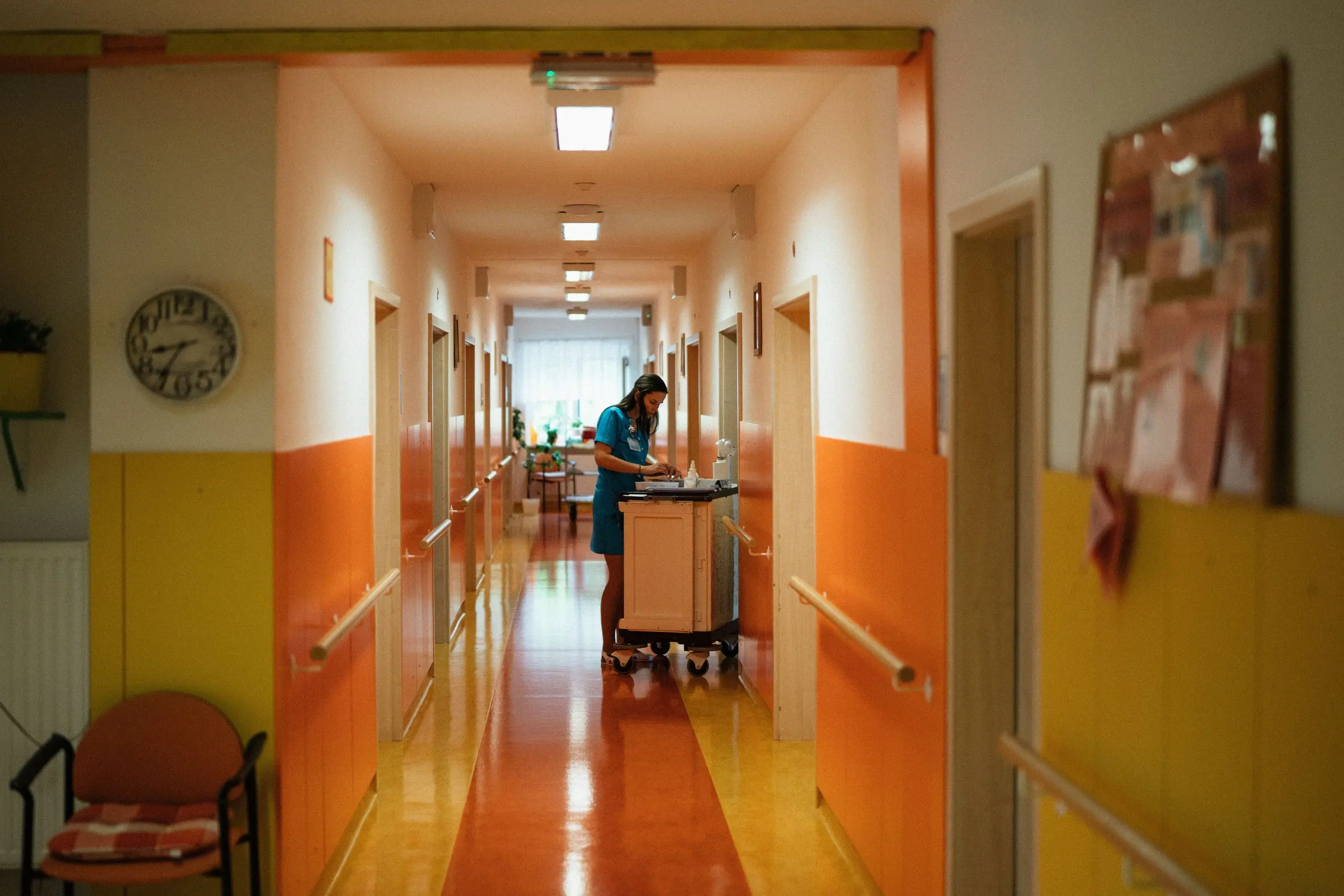
Hospitals run morning, evening and night shifts, 38.5 to 40 hours a week. Public hospitals give 30 days of paid leave a year.
In your first weeks you register your address, get your tax ID by post, open a bank account and collect your residence permit. We arrange your airport pickup, and a relationship manager stays in touch for your first six months. Our nurses live in towns like Hildesheim, Detmold and Varel.

Family and permanent residency
Nurse couples can be placed together, and your husband or wife can work in Germany. Government schools are free for your children. Once you are on a skilled worker permit, your husband or wife does not need to show German to join you.
Three years after your licence, with German at B1, you can apply for permanent residency. Residency and citizenship
Common questions
What is the age limit for nursing jobs in Germany?
Up to 41 years, for GNM, B.Sc and M.Sc nurses.
Can freshers apply for nursing jobs in Germany?
Yes, freshers can apply. Work experience is not required.
Can ANM nurses work in Germany?
Germany needs GNM, B.Sc or M.Sc. With ANM, you can apply for nursing jobs in Singapore, where the work is in English.
Do I need IELTS or OET for Germany?
No. Germany does not ask for IELTS or OET. You need German at B2.
How long does it take to learn German to B2?
About 6 months of full-time classes, starting from zero. Part-time takes longer.
Can my family come with me?
Yes. Nurse couples can be placed together, and your husband or wife can work in Germany. Government schools are free for your children.
Can I get permanent residency in Germany as a nurse?
Yes. You get a residence permit when you arrive. Three years after your nursing licence, with German at B1, you can apply for permanent residency. Citizenship is possible after 5 years in Germany.

Written and checked by EZMode Advisors
Last checked:
Sources
- Make it in Germany: nursing (German government)
- Recognition in Germany (Anerkennung in Deutschland)
- German government: the 2024 nursing law, with the choice to skip the comparison
- Make it in Germany: the recognition partnership visa
- German residence regulation, section 31a: visa times in the fast-track procedure
- German residence act, section 81a: the fast-track procedure
- TVöD-P pay table from 1 May 2026 (City of Stuttgart)